An AECB credit score in the UAE now uses Credit Score 3i: 300–850 for Mature profiles and 300–650 for New to Credit or New to Country profiles. Etihad Credit Bureau lists AED 10.50 for a score and AED 84 for an individual credit report including the score; the bank still makes its own lending decision.
The report helps explain the number. Read its accounts, limits and payment records before trying to improve a score or applying for a mortgage, car loan or card.
Which AECB Credit Score 3i range applies to you?
The bureau assigns the model according to the depth and availability of your credit history. A new resident’s score should not be compared directly with an established borrower’s number on another scale. These published ranges are not bank approval bands.
| Mature | 300–850 | The model and date on your established credit profile |
| New to Credit | 300–650 | Whether limited history explains the assigned model |
| New to Country | 300–650 | The explanation accompanying your new local profile |
Older articles may show 300–900. Use the bureau’s current individual score guidance and your report’s explanation. Neither a high score nor meeting a card’s minimum salary guarantees approval.
What your UAE credit report covers over 36 months
The official report page describes three years of financial obligations and bills, your last reported salary, card and loan summaries, and court-ordered financial obligations. Information comes from banks, finance companies, telecom and utility providers, courts and government entities. The bureau’s FAQs specify payment history for active and closed facilities and services, including returned cheques.
Check reported telecom accounts, including an e& or du account where shown, alongside water and electricity bills. Do not assume every bill or institution appears: read your actual file and the reporting dates. Closing a facility does not automatically erase its history.
Keep statements, settlement letters and closure confirmations together. An unexplained overdue entry deserves investigation even if the amount seems small compared with a future mortgage.
How to get your report through official UAE channels
Use the bureau’s website or official app. Its individual FAQs also identify TAMM and DubaiNow, with UAE PASS authentication. UAE PASS verifies identity; it is not a promise of a free report or a separate scoring agency.
The bureau announced an individual report service through Al Ansari Exchange branches on 13 April 2026 in its official news listing. Confirm the branch’s current identity, application and payment requirements before visiting. Do not follow the separate company-report procedure for a personal report.
Review the product and checkout price, save the report privately, and reconcile it against your records. Keep Emirates ID details, UAE PASS credentials and report copies away from unverified agents.
BNPL reporting in 2026: reports and scores are different
The bureau’s July 2026 reporting expansion added Tabby and Tamara information to UAE credit reports. Its current BNPL FAQs describe contracts, outstanding balances, status and remaining instalments, with information updated by the provider.
The same official FAQ explicitly states that BNPL reporting does not affect the current Credit Score model. Organisations reviewing the report can still consider those commitments. Report visibility, a score calculation and a lender’s affordability decision are three different things.
List your outstanding BNPL instalments in your own repayment budget and disclose commitments accurately when asked. Do not assume every lender applies a universal BNPL DBR formula; ask how your intended lender assesses them.
Can your AECB score recover in six months?
September 2026 reporting quoting the bureau’s director-general described an opportunity to rebuild after resuming regular repayments within up to six months, compared with up to two years previously. It also said the period does not guarantee an increase or a particular score.
Treat that as reported context about the model’s development. The current official score page says outcomes vary with individual profiles and behaviour; it does not promise your recovery date. Paying a default does not delete accurate history or guarantee credit approval.
The official sources reviewed do not establish a universal quarterly score recalibration timetable or publish numerical factor weights. They describe greater consideration of behaviour over time and up to 36 months of trended information. Avoid treating a reported design plan as an individual service deadline.
Credit utilisation and active usage in the 3i model
The bureau identifies utilisation, active credit usage, applications, payment behaviour, payment history and cheque behaviour among its score factors. It does not publish a universal 35/30/15/10/10 recipe or a points gain for paying a particular amount.
Use those factors as a review checklist: pay on time, investigate failed automatic payments, reduce balances you cannot comfortably repay and apply deliberately. There is no verified universal “stay under 30% and gain a fixed score” promise in the sources reviewed.
Read UAE credit utilisation and statement dates to distinguish reported balances from approved limits and repayment deadlines.
The 50% debt burden ceiling and 5% card-limit assessment
The CBUAE repayment rule limits relevant combined deductions to 50% of gross salary and qualifying regular income. That ceiling is not a recommendation to spend half your income servicing debt.
Emirates NBD’s published guidance includes loan instalments plus 5% of total credit card limits in recurring assessed debt. It explains why an unused limit can matter. The 5% assessment is not a bureau scoring weight or necessarily your statement’s minimum payment.
With AED 15,000 gross monthly income, AED 2,500 loan repayments and AED 30,000 total card limits, the illustrative assessed commitment is AED 4,000: AED 2,500 plus AED 1,500. That gives a 26.7% DBR, before the lender’s complete assessment.
Check the effect of existing limits
Uses 5% of total card limits, as described in Emirates NBD’s borrowing guidance. This is an educational example, not a lending decision or the bureau scoring formula. Your bank applies its full affordability policy.
Correct an error: the 10-working-day response requirement
Use the bureau’s personal data-correction service. Identify the account, provider, reporting date and incorrect field, and attach evidence such as a statement or clearance letter. Submit separate requests for inaccuracies from different providers.
The correction support page says providers must respond within 10 working days under Central Bank regulations. It also explains that processing depends on the provider. This is not a guarantee that the investigation, data amendment and score update all finish within that period.
Keep the reference and written response. If the deadline passes, follow up on the original ticket. Once the provider confirms a correction, ask when its update will reach the bureau, then check the record rather than repeatedly buying a score.
Compare cards after checking your repayment capacity
Compare salary rules and fees against spending you can repay. The eligibility quiz screens published requirements; it does not access your bureau file. Read UAE credit card interest and minimum payments before comparing rewards if you carry a balance.
The Wio Credit review models the unsecured product, whose current key facts publish a monthly salary minimum of AED 7,000. Wio’s August 2026 KFS separately documents a deposit-backed card with a limit up to 80% of a locked deposit. Check that product’s own eligibility; a deposit does not guarantee approval or a score.
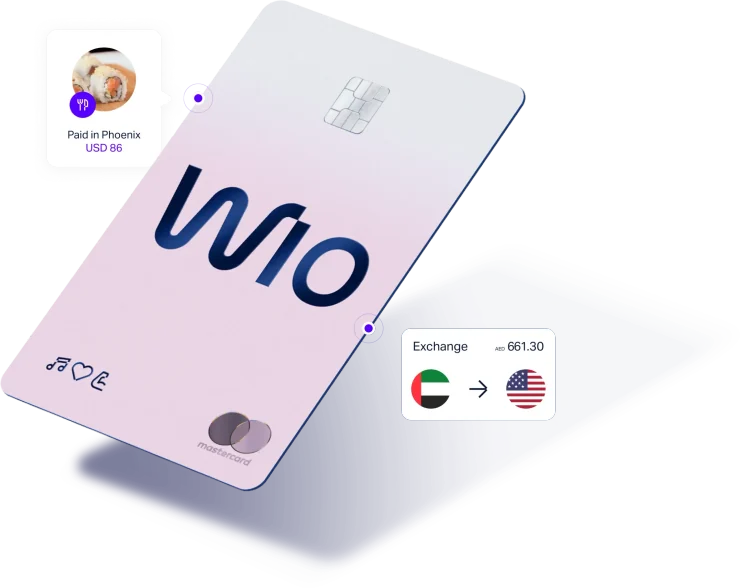
Wio Credit
- Salary minimum
- AED 7,000
- Annual fee
- AED 0
- First-year estimate
- AED 1,632
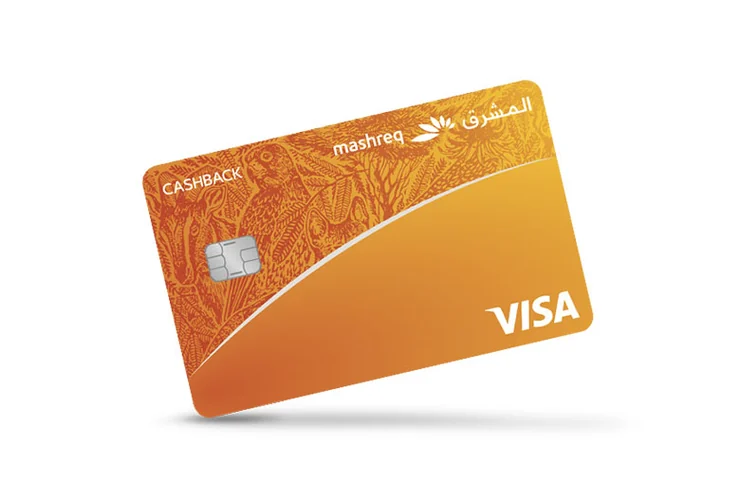
Mashreq Cashback Credit Card
- Salary minimum
- AED 5,000
- Annual fee
- AED 0
- First-year estimate
- AED 2,063
ADCB 365 Cashback Credit Card
- Salary minimum
- AED 5,000
- Annual fee
- AED 383.25
- First-year estimate
- AED 3,305
Frequently asked questions
Is the UAE AECB credit score still 300 to 900?
The bureau’s current individual Credit Score 3i page lists 300–850 for Mature profiles and 300–650 for New to Credit or New to Country profiles. Older material may use 300–900. Compare the model and scale on your current report.
Does Tabby or Tamara change my AECB credit score?
Their BNPL information is included in the reporting expansion announced in July 2026. The bureau’s current FAQ says BNPL reporting does not affect the current Credit Score model, but lenders and other authorised organisations may consider the information in your report.
Will my credit score recover automatically after six months?
Do not assume that. Reporting quoting the bureau’s director-general describes a shorter recovery opportunity after regular repayments resume, without promising a score increase or a particular level. The current official product guidance says results depend on the individual credit profile and behaviour.
How quickly must a credit-report dispute be answered?
The bureau’s correction support page says information providers must respond within 10 working days under Central Bank regulations. That is a response requirement, not a guarantee that every investigation, corrected report or score change will be complete within 10 days.
Does an unused credit card limit affect my debt burden?
It can. Emirates NBD’s published affordability guidance includes 5% of all card limits in recurring assessed debt. That calculation is separate from the AECB score and from the minimum payment printed on your statement. Ask the intended lender how it assesses your commitments.
Sources & review
Article reviewed 19 Oct 2026. Embedded product records show their own source-check dates. Conditions can change after review.
- Etihad Credit Bureau — Credit Score 3i models, factors and prices
- Etihad Credit Bureau — individual report contents and AED 84 price
- Etihad Credit Bureau — individual FAQs, BNPL and government access channels
- Etihad Credit Bureau — July BNPL and April Al Ansari service announcements
- Etihad Credit Bureau — personal data correction
- Etihad Credit Bureau — information-provider response requirement
- CBUAE Rulebook — Article 7 repayment instalments
- Emirates NBD — debt burden assessment using total card limits
- Emirates 24|7 — September 2026 reporting quoting the bureau’s director-general on recovery
- Wio — August 2026 Credit key facts statement