Credit utilisation in the UAE compares a credit card balance with its approved limit; a lender’s debt burden ratio (DBR) compares assessed monthly commitments with income. Lowering your balance before a statement is produced can change that statement, while an unused approved limit can still count towards a bank’s affordability assessment.
You need to understand both calculations before changing a limit, adding another card or preparing for a mortgage.
How to calculate your credit card utilisation
Divide the relevant balance by the approved credit limit, then multiply by 100. An AED 3,000 balance against an AED 10,000 limit gives 30% utilisation. If a posted payment lowers the balance to AED 1,000, the ratio becomes 10%, assuming the same limit and no new transactions.
That example describes a ratio. It does not establish a guaranteed score improvement. Etihad Credit Bureau lists utilisation among its factors but does not publish a universal 30% target or a points award for crossing it.
Review each card as well as your combined balances. A manageable total can hide one card that is nearly exhausted, leaving little room for an emergency or an unexpected fee.
Statement date, payment due date and bureau reporting date
These dates perform different jobs. Do not assume that a bank reports your balance on the same day it prepares your statement.
| Statement date | The issuer produces a bill for a billing period | Review the statement, transactions and total due |
| Payment due date | The deadline for the required payment on that statement | Allow enough time for the payment to be credited |
| Bureau reporting date | The information provider submits or updates credit data | Ask which balance and reporting cycle the bank supplies |
| Current balance | Transactions and payments currently posted to the account | Check new spending after the statement as well |
An issuer may take time to credit a payment or process a refund. A transfer instruction, pending transaction or expected refund is not the same as a posted credit. Check the account after making a payment.
Paying before statement generation: what it can change
Suppose an AED 10,000-limit card has an AED 6,000 posted balance shortly before its statement date. An AED 4,000 payment credited before the cut-off could bring the statement balance to AED 2,000, assuming no further postings. That changes the statement ratio from 60% to 20%.
It does not establish that the bureau will receive the 20% figure: the bank may use another reporting date. Nor does it remove the need to pay the amount subsequently shown as due. Check that any automatic repayment remains correctly configured after an early payment.
Ask the issuer two specific questions: “What balance do you report?” and “When do you report or update it?” Read your AECB report to compare the reported limit, balance and date with your statements.
Why the 5% card-limit DBR assessment can include unused cards
Emirates NBD’s borrowing guidance describes monthly recurring debt as instalments plus 5% of the total limit of all cards held. That is an affordability assessment of available credit exposure, rather than a calculation of how much you currently owe.
An AED 30,000 total limit therefore produces an illustrative AED 1,500 monthly assessed card commitment under that method, whether the current card balance is AED 0 or AED 3,000. Ask the bank considering your next application how it applies its own assessment.
Do not confuse this with a minimum payment. A card statement may also mention 5%, but its calculation can use a balance and add instalments, overdue amounts or fees. Always read the actual statement and agreement.
How the CBUAE 50% debt burden ceiling works
The CBUAE repayment rule sets a 50% ceiling for relevant combined deductions against gross salary and qualifying regular income. The lender’s complete affordability assessment can be more restrictive. Household expenses still need to fit your budget below that regulatory ceiling.
| Gross monthly income | AED 15,000 | AED 15,000 |
| Loan instalments | AED 2,500 | AED 2,500 |
| Cards assessed at 5% of limits | AED 1,500 | AED 3,000 |
| Combined assessed commitments | AED 4,000 | AED 5,500 |
| Illustrative DBR | 26.7% | 36.7% |
The difference here comes entirely from the approved limits. It is not an AECB score forecast or a loan approval estimate.
Check the effect of existing limits
Uses 5% of total card limits, as described in Emirates NBD’s borrowing guidance. This is an educational example, not a lending decision or the bureau scoring formula. Your bank applies its full affordability policy.
Should you reduce a limit before applying for a mortgage?
Start by asking the intended lender which commitments it counts and what documents it needs. A limit reduction may change an affordability calculation, but the bank may need evidence that the change has been completed and reported.
There is also a trade-off: lowering a limit while keeping the same outstanding balance increases utilisation mathematically. An AED 3,000 balance is 10% of an AED 30,000 limit and 30% of an AED 10,000 limit. That observation does not predict a particular score movement.
Choose a limit you can manage, retain written confirmation of changes, and check instalments or other obligations before closing an account. Do not raise a limit solely to chase a utilisation percentage.
A practical monthly statement and repayment routine
- Check the statement date and due date on each account.
- Match posted transactions and refunds with your records.
- Set a repayment you can fund and verify that it completes.
- Record approved limits separately from current balances and instalments.
- Before a major application, review the bureau report and resolve inaccuracies with the provider.
Paying only the minimum can leave expensive borrowing even when every payment is on time. Read UAE credit card interest and minimum payments before using a rewards estimate to choose a card.
Compare rewards after planning full repayment
Use the UAE rewards calculator for purchases already in your budget. Its AED reward figures do not include your personal finance charges. No reward programme can establish whether a limit or repayment plan is affordable for you.
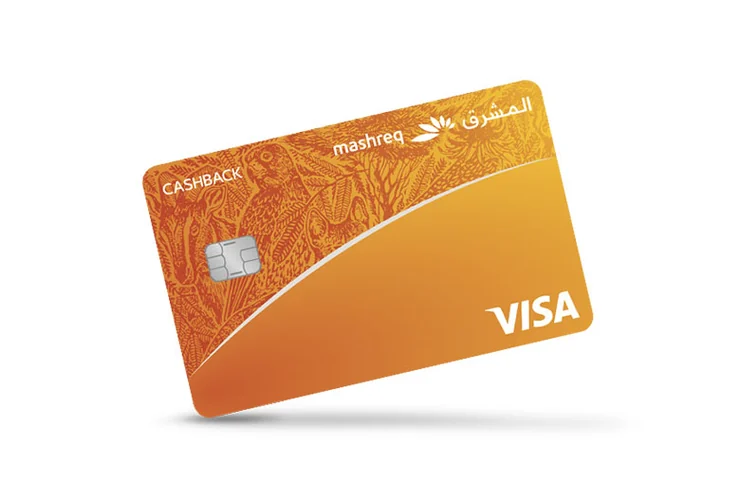
Mashreq Cashback Credit Card
- Salary minimum
- AED 5,000
- Annual fee
- AED 0
- First-year estimate
- AED 2,063
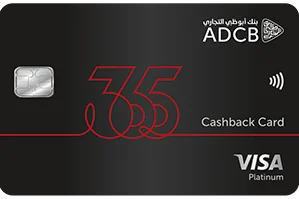
ADCB 365 Cashback Credit Card
- Salary minimum
- AED 5,000
- Annual fee
- AED 383.25
- First-year estimate
- AED 3,305
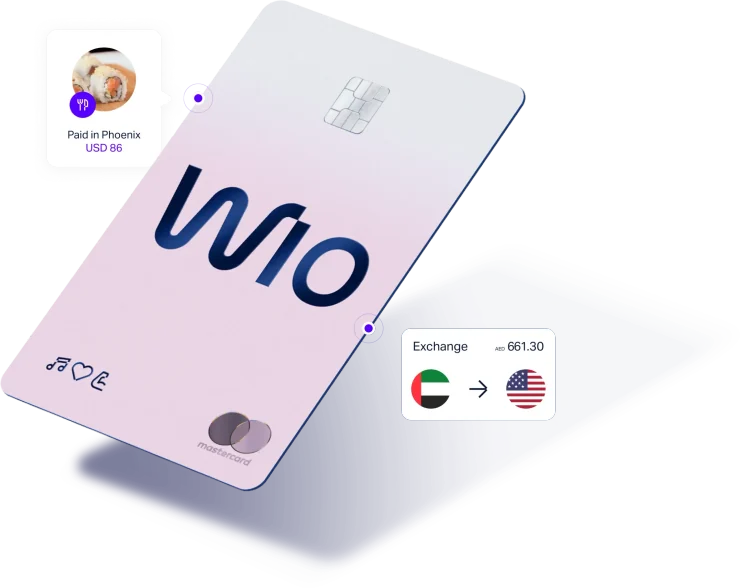
Wio Credit
- Salary minimum
- AED 7,000
- Annual fee
- AED 0
- First-year estimate
- AED 1,632
Frequently asked questions
Does paying before my UAE credit card statement date improve my AECB score?
It can reduce the balance on that statement if the payment posts in time. Whether it lowers the bureau-reported balance depends on the issuer’s reporting date and process. Etihad Credit Bureau does not guarantee a specific score increase for that action.
Is 30% utilisation an official UAE approval rule?
The bureau identifies utilisation as a score factor but the official sources reviewed do not establish a universal 30% approval threshold or guaranteed score outcome. A bank also assesses income, commitments and its own policy.
Why can an unused card reduce my borrowing capacity?
An unused card still has an approved limit. Emirates NBD’s published affordability guidance includes 5% of all card limits in monthly assessed commitments, so a zero balance does not necessarily remove that commitment.
Is the 5% DBR assessment the minimum payment I must make?
No. The DBR assessment can use approved limits, while the actual minimum payment comes from your statement and card agreement. Pay the statement’s amount by its due date; paying the full statement balance serves a different purpose from paying only the minimum.
Sources & review
Article reviewed 19 Oct 2026. Embedded product records show their own source-check dates. Conditions can change after review.
- Etihad Credit Bureau — utilisation and current scoring factors
- Etihad Credit Bureau — report contents and reporting history
- CBUAE Rulebook — Article 7 repayment instalments and 50% ceiling
- Emirates NBD — DBR assessment including 5% of all card limits
- Emirates NBD — credit card key facts and statement/payment examples