Credit cards for UAE school fees and utilities must be compared using the actual merchant category, qualifying spend and monthly cap. ENBD Duo, ADIB Cashback and ADCB 365 apply different earning and redemption rules, so a headline percentage is not enough to choose a card.
Large bills deserve a precise calculation
Tuition and utility bills can form a substantial share of a UAE household budget. That makes the reward rate interesting, but also makes exclusions costly. A generic “up to” cashback headline is insufficient: the exact merchant classification, payment channel, cap and processing charge decide the return.
Begin with the invoice amount and the school or utility provider’s accepted payment methods. Ask about any surcharge and whether an instalment plan changes the transaction’s eligibility. Compare the total cost of each payment method before considering points.
ADCB 365 has changed
ADCB’s benefits update effective 1 July 2026 sets eligible direct utility and telecom earning at 0.5%, groceries at 3%, and fuel/Salik at 5%. The current forecast uses 0.5% for direct utility-merchant payments after the AED 5,000 monthly retail threshold. ADCB-channel bill payments earn no cashback. School fees remain excluded conservatively because the bank lists education among reduced-rate MCCs while also publishing school-fee exclusion wording. Confirm the exact merchant and payment channel before relying on education rewards. The AED 1,000 monthly cap and approved credit limit also matter. Current ADCB 365 terms.
This is a useful reminder to recheck a card you already own. A benefit that applied at issuance may have been revised later. Keep copies of the bank’s updated benefits notice alongside the original welcome terms.
Duo rewards are points, not equal-rate cashback
Emirates NBD Duo lists 5% Plus Points on eligible education and utility spending when the monthly statement spend reaches AED 5,000. Without that spend threshold the eligible-category rate drops; total statement earning is capped at 500 Plus Points. Abu Dhabi eligibility should be confirmed. Duo product conditions.
Cash redemption currently uses AED 0.75 for each Plus Point, so 5% point earning corresponds to 3.75% modelled cash value before the cap. Cash redemption also has a minimum points balance. Other ways to redeem can have different conditions. Official Plus Points redemption.
As a simplified hypothetical example, AED 10,000 of eligible spending at a 5% Plus Points earn rate creates 500 points, worth AED 375 at that cash rate. Spending more within the same capped statement need not increase the reward. Moving a tuition bill between statements can affect earning, but never assume you can change the merchant’s charge dates or the bank’s posting schedule.
ADIB Cashback Visa: Education and Utility Rewards
ADIB’s current Cashback Visa Covered Card lists 4% on education and utility payments, with separate monthly category caps. Its annual fee is AED 103.95 including VAT. Current product-specific cashback terms do not publish a minimum monthly retail threshold; an AED 5,000 condition elsewhere applies to the separate Spice card. The product page uses Ijarah wording while the linked KFS describes commodity Murabaha financing, so request the applicable contract. Salary eligibility remains unpublished and needs bank confirmation. ADIB cashback terms.
The religious-finance classification and the financial cost are distinct questions. A Sharia-compliant product still has a profit structure, fees and repayment obligations. Compare the applicable profit rate rather than substituting a conventional borrowing label.
Model tuition when it is charged
Monthly averages help compare cards, but tuition is often paid in term-sized amounts. Suppose a card hypothetically pays 4% with an AED 300 education cap per month. A single eligible AED 15,000 charge would generate AED 600 before the cap and only AED 300 after it. If the same expense is legitimately split into two AED 7,500 charges in separate qualifying months, each could earn AED 300, subject to all other conditions.
That example explains cap mechanics; it is not a claim that a school offers a particular payment schedule or that every split charge qualifies. Include school payment-plan fees and bank instalment fees. A lower reward with no surcharge can leave you better off than a higher headline rate with an added cost.
Payment channels and merchant codes matter
A payment to a school, payment processor or general education portal can be coded differently. The same applies to direct utility payments and third-party bill-payment apps. Bank apps may exclude their own bill-payment channel from rewards even when eligible direct merchant transactions earn.
Before making a large charge, check the bank’s merchant-category definitions and ask the provider about how it processes cards. After the first payment, inspect the reward statement. If a transaction did not earn as expected, resolve that classification before routing your entire year’s fees through the card.
Rent payments require particular care. Many landlords accept cheques or bank transfers; a third-party card service may charge fees or create a non-eligible transaction. Dirham Perks does not include rent in its standard card-spend forecast.
A repeatable annual review
Create a schedule of tuition, utilities and insurance, then apply actual statement caps and expected eligible rates. Subtract card fees and payment surcharges. Exclude categories you cannot verify, and keep enough cash to settle the statement.
The spending matcher provides a useful monthly benchmark, while the directory’s conditions identify the current education-reward candidates. For a large uneven bill, supplement that average with your real charge dates. The best card is the one that leaves the most usable value after its actual conditions, not the largest percentage in an advertisement.
See the effect of a monthly cap
| AED 7,500 | 4% | 300 | 300 | 300 |
| AED 15,000 | 4% | 600 | 300 | 300 |
These amounts illustrate cap mechanics rather than a promise about a school’s accepted payment schedule.
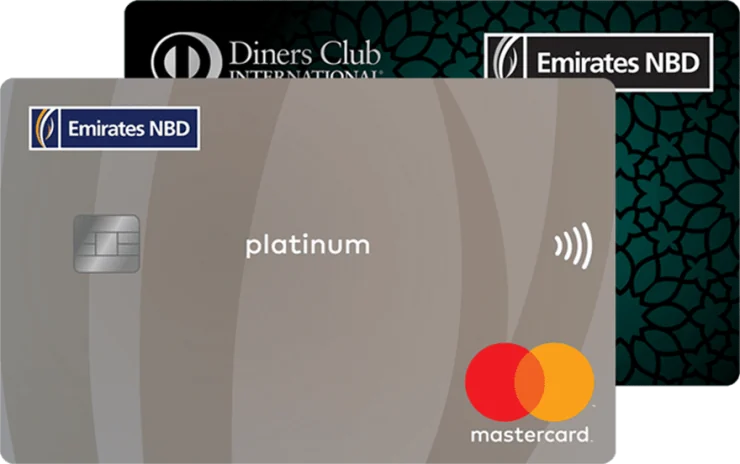
Emirates NBD Duo Credit Cards
- Salary minimum
- AED 12,000
- Annual fee
- AED 0
- First-year estimate
- AED 2,880
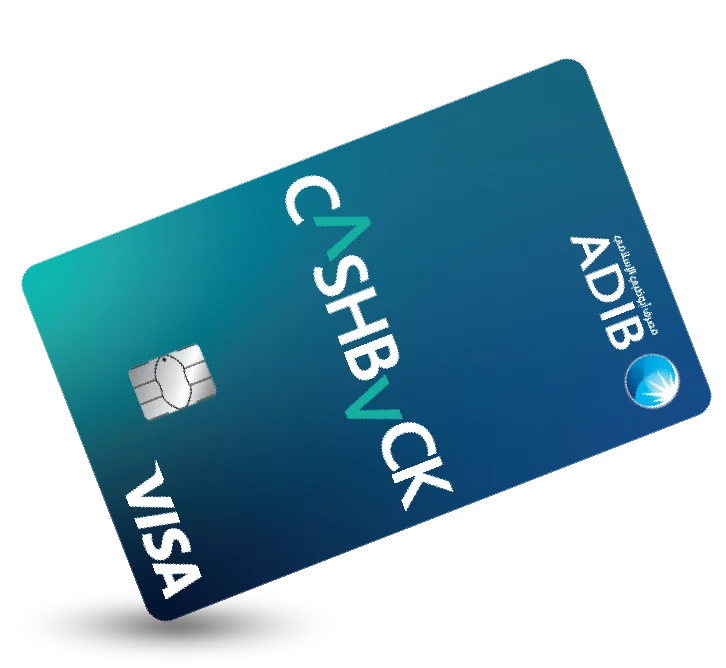
ADIB Cashback Visa Covered Card
- Salary minimum
- Confirm with bank
- Annual fee
- AED 103.95
- First-year estimate
- AED 3,496
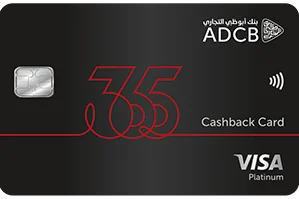
ADCB 365 Cashback Credit Card
- Salary minimum
- AED 5,000
- Annual fee
- AED 383.25
- First-year estimate
- AED 3,305
Frequently asked questions
Does 5% Plus Points mean 5% cash back?
No. At AED 0.75 per Plus Point, a 5% point earning rate corresponds to 3.75% modelled cash value before thresholds and caps.
Should I average annual tuition into monthly spending?
An average is useful for a benchmark, but actual posting months and statement caps determine the reward on a large invoice.
Sources & review
Article reviewed 18 Oct 2026. Embedded product records show their own source-check dates. Conditions can change after review.